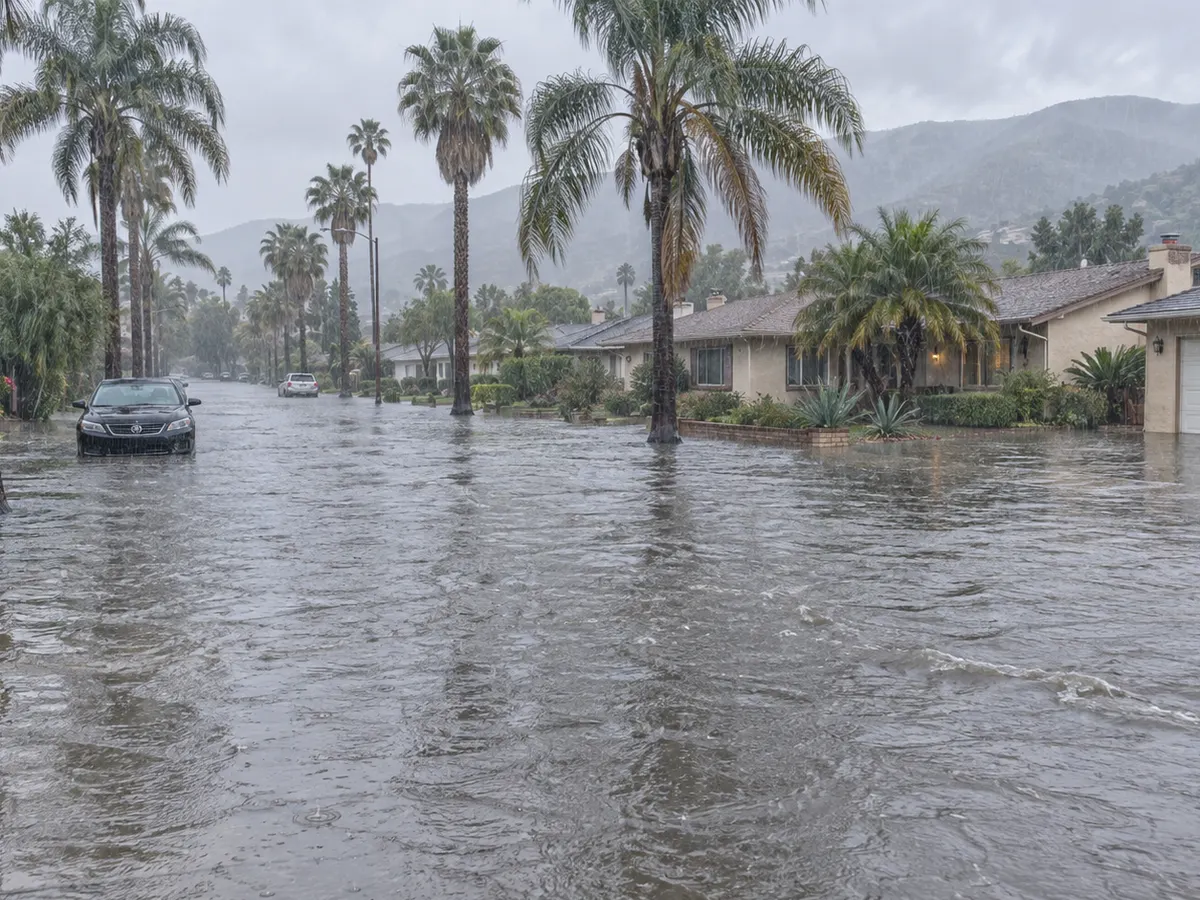
Cleaning up after storm water in Canoga Park
The IICRC lists rising water from rivers or streams as an example of Category 3 water, while storm water is not automatically Category 3; the restorer decides after inspecting[IICRC 2026 position statement]. Either way, floodwater calls for protective gear and removal of materials it soaked.
FEMA advises removing drywall and insulation that floodwater touched and photographing all damage first[FEMA]. In a Canoga Park home, that usually means a flood cut along the walls, removal of wet flooring and a full dry-out before anything new goes in.
How the job usually runs
- Wait for safe entry. Do not go back in until officials say it is safe[FEMA].
- Document. Photos and video of every room.
- Remove. Wet drywall, insulation and flooring come out.
- Clean and dry. Surfaces cleaned, then dried to verified readings.
Do
- Wear rubber boots and gloves[CDC].
- Keep children and pets out of flooded rooms.
First steps before the crew arrives
- Shut off the source. Use the valve at the fixture first. If water keeps coming, close the main shut-off for the house.
- Stay safe. Do not walk through water near electrical outlets or appliances; disconnect appliances before power comes back on[CDC].
- Take pictures. Photograph and video the damage, room by room, before cleanup starts[FEMA].
- Protect belongings. Move rugs, electronics and paper goods to a dry area, and put furniture legs on blocks.
- Start drying fast. The EPA says to dry wet materials within 24 to 48 hours[EPA]. Water left longer moves further into floors and walls.
Leave large amounts of water to extraction equipment, and keep lights and ceiling fans off under any wet ceiling.
Where most household water damage starts
- Water heaters. Tanks rust through at the bottom, and relief valves and supply connections drip. In many Valley homes the heater sits in a garage or a closet next to finished rooms.
- Washing machine hoses. Rubber supply hoses crack with age and can release water at full line pressure until someone closes the valve.
- Toilets and supply lines. A failed fill valve, cracked tank or loose supply line can run for hours, often while nobody is home.
- Air conditioning condensate. A clogged drain line backs up the drain pan, and the overflow lands in the ceiling below or on the floor around the air handler.
- Refrigerators and dishwashers. Ice maker lines and dishwasher connections leak slowly under cabinets, where the water can sit for weeks.
- Winter storms and roof leaks. Heavy rain finds its way in around flashing, vents and windows, and contaminated wind-driven rain counts as Category 3 water[IICRC 2026 position statement].
The source matters because it sets the water category and the starting point for moisture mapping.
Slab floors and raised floors
Los Angeles City Planning’s history of postwar tract housing notes that these houses often have concrete slab floors rather than raised floors with wood joists[LA City Planning]. Much of the Valley was built in that era, so on many calls the water is on or under a slab.
Older houses are more likely to be raised. The state’s Earthquake Brace + Bolt program, which helps owners retrofit houses on raised foundations, ranks ZIP codes partly by the share of houses built before 1940[Earthquake Brace + Bolt]. In a raised-floor house, a leak can drip through the subfloor into the crawl space and stay hidden.
Either way, the drying plan changes: slab jobs focus on flooring, baseboards and the bottom of walls, while raised-floor jobs add the subfloor, joists and crawl space.
How long drying takes in Canoga Park
Small leaks found early dry in days; whole-house floods take longer, and the EPA says the drying-out process after a flood could take several weeks[EPA flood cleanup guide]. Either way, the work should start within 24 to 48 hours[EPA].
Dry outdoor air is not the same as a dry wall. EPA guidance is to ventilate when outside air is cold and dry and to dehumidify when it is warm and humid[EPA], and the inside of a wet wall cavity or carpet pad still needs moving air and dehumidification to dry in time.
Leave the equipment running, keep doors to the drying area closed, and let the technician move it. Turning off air movers at night to cut noise can add days to the job.
What can be saved and what usually goes
The deciding factors are the type of water and how long things stayed wet. The EPA says materials that cannot be thoroughly cleaned and dried within 24 to 48 hours should be discarded[EPA flood cleanup guide], and the CDC adds that items which cannot be disinfected, such as wall coverings, cloth, rugs and drywall, should be thrown away[CDC].
With clean water caught early, the EPA notes that wallboard, fiberglass insulation and wall-to-wall carpet may sometimes be dried and saved, though replacing them can avoid indoor air problems later[EPA flood cleanup guide].
Take photos and video of damaged items before they are removed[FEMA].
Atmospheric river storms and water inside the house
Rain here tends to arrive in bursts. The National Weather Service’s February 2024 climate report for downtown Los Angeles shows 4.10 inches on February 4, 2.93 inches on February 5 and 12.66 inches for the month[NWS Los Angeles].
In heavy rain, the common entry points are roofs, skylights, window and door frames and garage thresholds. Ceiling water is the one to move on fast, because wet insulation and drywall above you add weight.
Do not stand under a sagging ceiling, and turn off power to rooms where water is near outlets or fixtures if you can do so safely[CDC].
Before you go back into a flooded home
Turn around at flooded roads. Six inches of fast-moving water can knock an adult down, and 12 inches of rushing water can sweep away most cars, according to the NWS[NWS].
If there is standing water inside, be ready to turn off the power, and unplug appliances so they do not shock anyone when power returns[CDC]. Take photos and video of every room before cleanup starts[FEMA].
Flood cleanup and Canoga Park homes
The Census Bureau counts 11,405 housing units in ZIP code 91303. 25% are detached single-family houses, 72% are in buildings with two or more units, and 22% of occupied homes are owner-occupied[U.S. Census Bureau]. 45% of homes in ZIP code 91303 were built before 1980 and the median year built is 1983[U.S. Census Bureau]. Original supply lines, drain lines and water heater connections in houses that age are common starting points for leaks.
Canoga Park is part of the City of Los Angeles, so water comes from LADWP. Leaks at the street, the meter or a broken main are reported to LADWP at 1-800-DIAL-DWP (1-800-342-5397), where representatives answer outage and water trouble calls around the clock[LADWP].
Other services in Canoga Park
- Water damage restoration in Canoga Park
- Emergency water removal
- Water extraction
- Water mitigation
- Water damage cleanup
- Flood restoration
- Sewage cleanup
- Burst pipe water damage