Water damage help
- Emergency water removalPumping and extraction of standing water.
- Water extractionWater pulled from carpet, pad and hard floors.
- Water mitigationRemoval of wet materials and controlled drying.
- Water damage cleanupSoaked materials out, surfaces cleaned, structure dried.
- Flood restorationStorm water and rising water inside the home.
- Flood cleanupMud, debris and wet materials after a storm.
- Sewage cleanupToilet, drain and sewer lateral backups.
- Burst pipe water damageSplit supply lines, failed fittings and broken pipes.
- Crawl space water removalStanding water under raised-floor homes.
Why fast drying matters, even in a dry climate
The EPA recommends drying wet materials within 24 to 48 hours and keeping indoor humidity below 60 percent[EPA]. Dry outdoor air does not dry the inside of a wall cavity or the pad under a carpet. Restoration crews use extraction, dehumidifiers and air movers to get there, and moisture meters to confirm it.
Winter storms can still put a lot of water on the Valley in a short time. In February 2024, the National Weather Service recorded 4.10 inches of rain at downtown Los Angeles on February 4 alone and 12.66 inches for the month[NWS Los Angeles].
What water damage restoration in the San Fernando Valley includes
A water damage restoration job in the San Fernando Valley follows a set order. Each stage depends on the one before it, so the work is planned before the equipment comes off the truck.
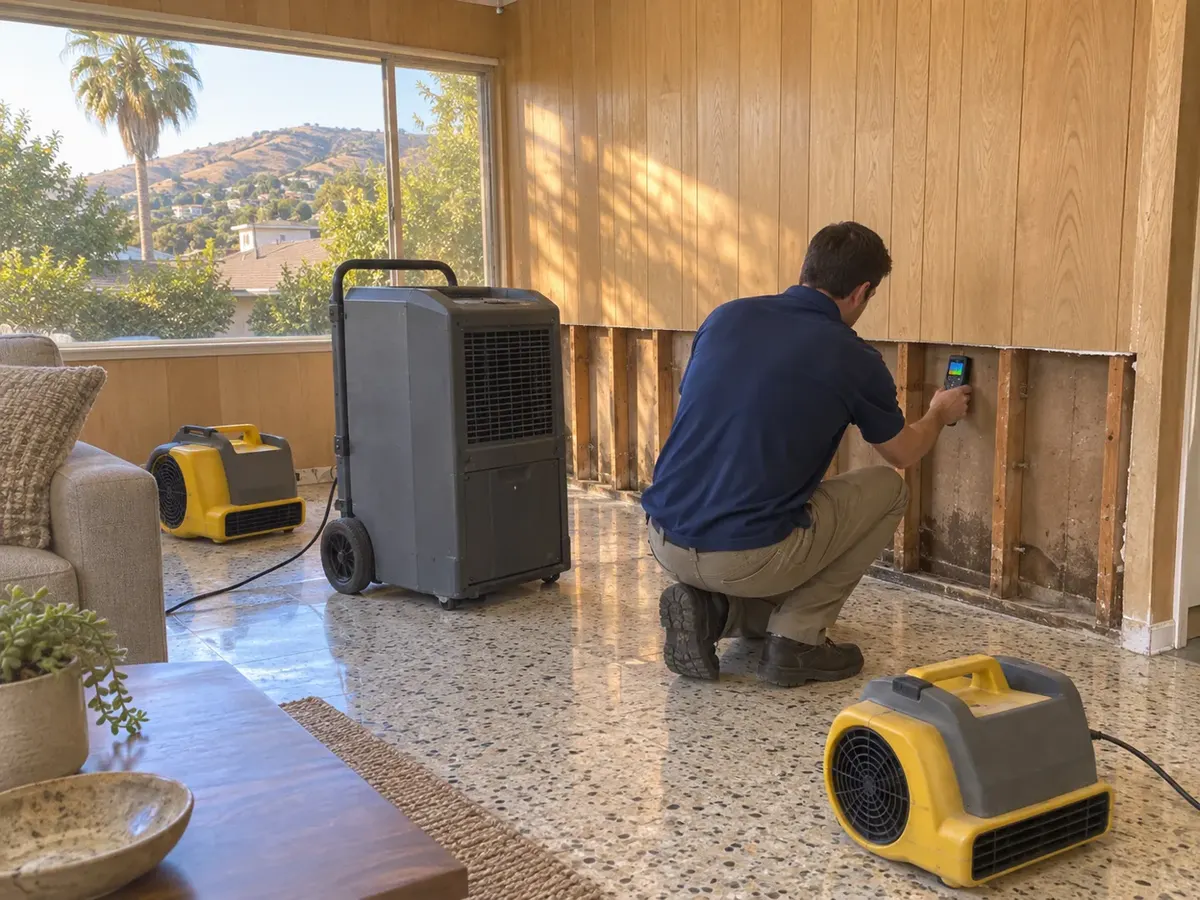
- Inspection and moisture mapping. The technician confirms the leak is stopped, then maps how far the water traveled with moisture meters and infrared cameras.
- Water removal. Submersible pumps take out deep water, and extraction units pull water from carpet, pad and hard floors. Mechanical extraction removes water much faster than air drying can.
- Removal of what cannot dry. Soaked pad, baseboards, the lower part of wet drywall and wet insulation come out when they cannot be dried in place. The EPA says wet materials that cannot be thoroughly cleaned and dried within 24 to 48 hours should be discarded[EPA flood cleanup guide].
- Structural drying. Air movers push air across wet surfaces while dehumidifiers pull the moisture out of the air. The EPA target is indoor humidity below 60 percent[EPA].
- Cleaning. Surfaces touched by contaminated water are cleaned and disinfected. The CDC says to throw away items that cannot be disinfected, such as wall coverings, cloth, rugs and drywall[CDC].
- Final readings. Equipment stays until moisture readings in the walls, subfloor and framing return to normal, and those readings are written down.
Water categories and why they change the job
Restoration companies sort water by how contaminated it is, using the IICRC categories. Category 3 is grossly contaminated: sewage, waste line backflows from beyond a trap, seawater, rising rivers or streams, and contaminated wind-driven rain[IICRC 2026 position statement].
The category decides the order of work. Category 1 drying can start right away, while Category 2 and 3 losses get cleaned up under contamination controls before drying begins[IICRC 2026 position statement]. Storm water is not automatically Category 3; the restorer decides after inspecting[IICRC 2026 position statement].
A clean leak does not stay clean forever. Time and temperature can change the category[IICRC 2026 position statement], and a warm house speeds that up.
Earthquakes, water heaters and broken lines
On January 17, 1994, the magnitude 6.7 Northridge earthquake hit on a blind thrust fault under the San Fernando Valley[USGS]. The USGS puts property damage at about 40 billion dollars, with more than 7,000 people injured[USGS].
The USGS notes that strong shaking can topple water heaters and break water mains[USGS]. California law requires all residential water heaters to be braced, anchored or strapped to resist falling or moving in an earthquake[California Health and Safety Code 19211], and the Division of the State Architect calls for at least two sets of straps on a typical tank[California DSA].
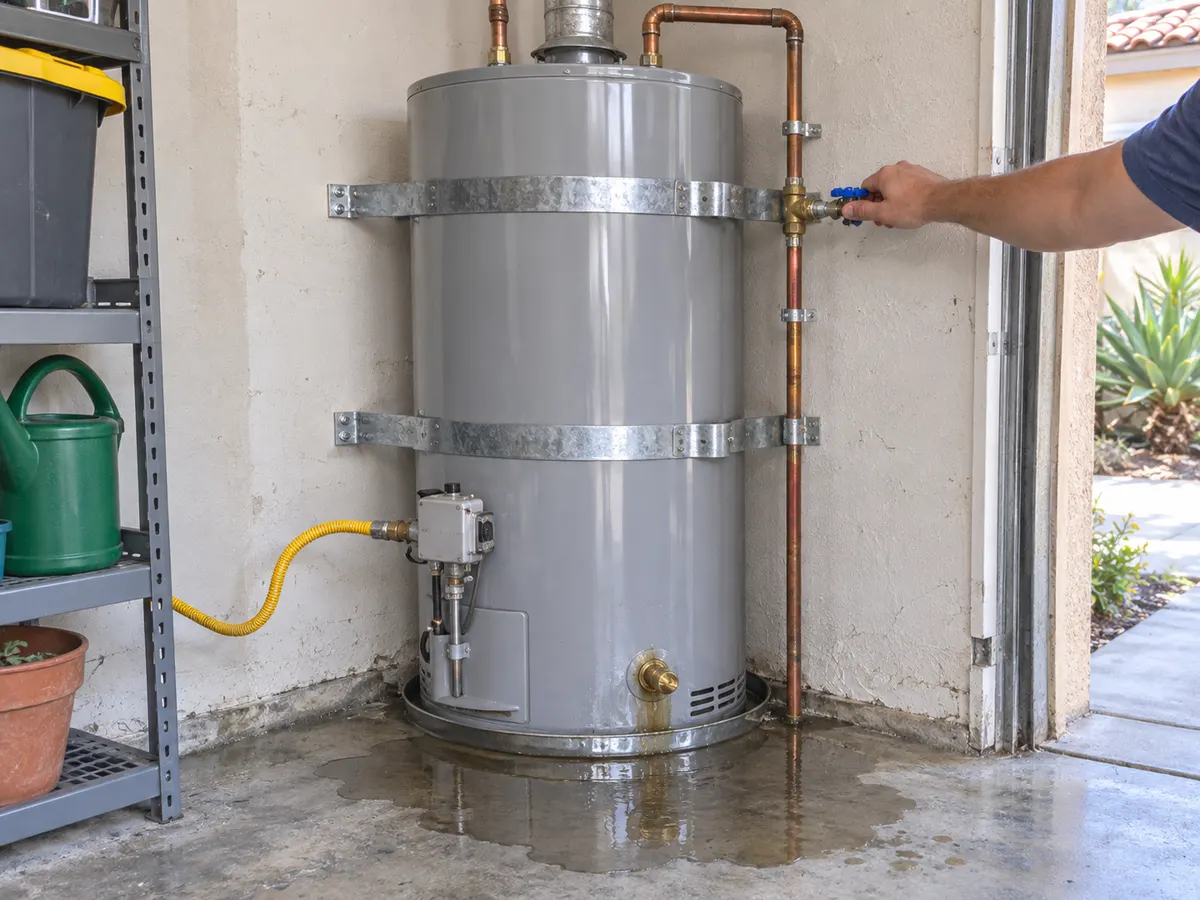
After an earthquake, check the water heater, the lines under sinks and the main shut-off before anything else. If water is running, close the main and keep out of rooms where water has reached outlets[CDC].
Toilet and drain backups
Sewage is Category 3 water[IICRC 2026 position statement]. Keep children and pets out of the area, do not run fans that blow air from the wet room into the rest of the house, and do not try to dry it in place. Soaked carpet, pad and drywall are removed and the area is cleaned and disinfected before drying.
LA Sanitation explains the split: the city owns the sewer main, and the private lateral from the house to the middle of the street is the owner’s responsibility. When any plumbing fixture in the home sits below the street manhole cover, a backwater valve is required, permitted through the Department of Building and Safety[LA Sanitation].
Questions to ask the restoration company
- What category is the water, and how does that change the plan?
- Where did the moisture meter show water, and how far did it spread?
- What needs to be removed, and why can it not be dried?
- How many dehumidifiers and air movers will run, and how often will someone check readings?
- Will I get a written scope and daily drying logs?
- Can you show your California contractor license?
Clear answers to these questions are a good sign. So is a technician who takes readings before quoting.