When sewage comes up a drain in San Fernando
A toilet overflow or a floor drain pushing up waste is Category 3 water under IICRC guidance[IICRC 2026 position statement]. Crews set up plastic containment, wear protective gear and remove soaked carpet, pad and drywall rather than trying to clean them.
Stay out of the area if you can. If you have to enter, the CDC advises rubber boots and gloves[CDC]. Stop running water anywhere in the house until the line is cleared.
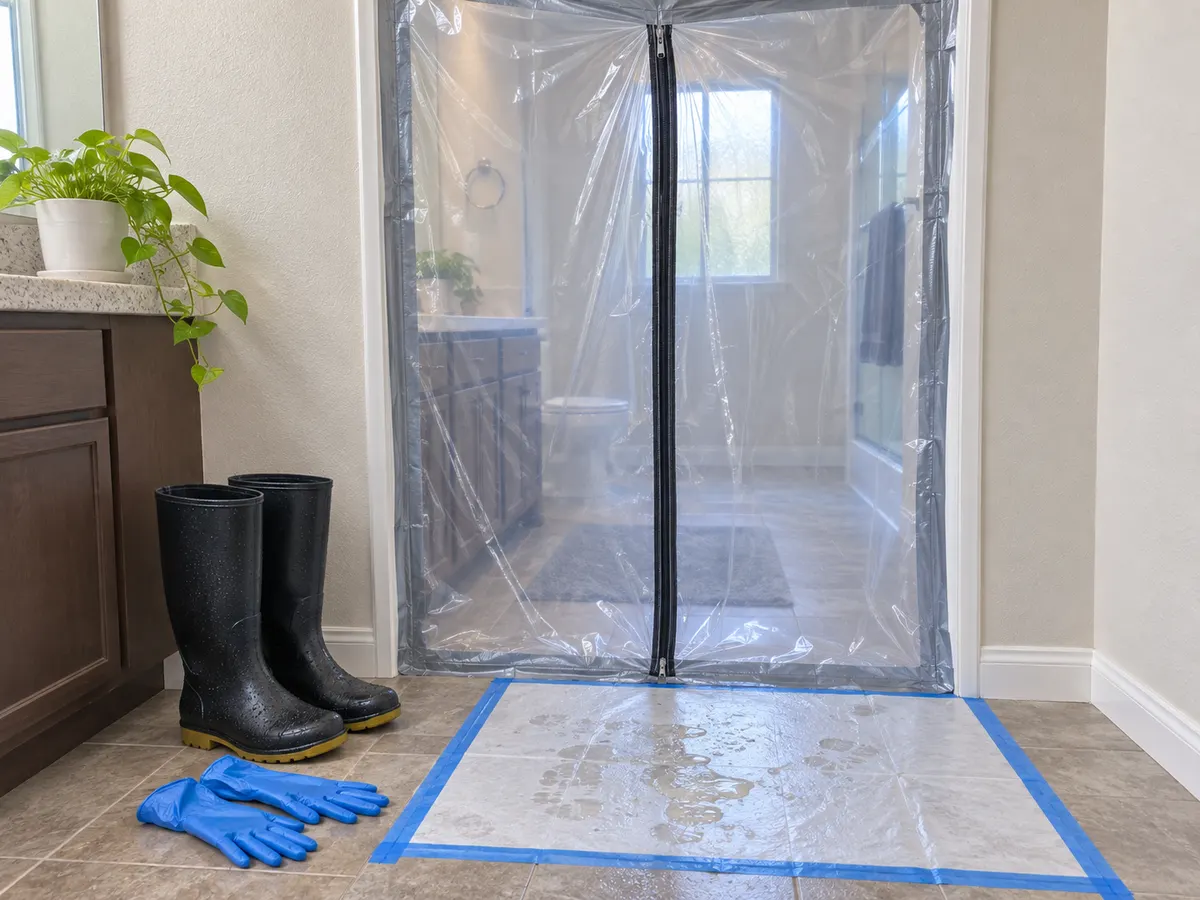
How the job usually runs
- Stop water use. No flushing, showers or laundry.
- Contain. Plastic barriers keep the area sealed off.
- Remove. Porous materials the sewage touched come out.
- Clean, disinfect, dry. Hard surfaces cleaned and the structure dried.
Do
- Keep children and pets away.
- Photograph the damage[FEMA].
Avoid
- Running fans that push air from the area into the house.
- Cleaning sewage-soaked carpet yourself.
Signs you need water damage restoration, not just a mop
- Baseboards or door casings are swelling
- Vinyl plank or laminate is lifting or cupping
- Stains are spreading on a ceiling or wall
- Water reached cabinets, closets or a hallway
- A drain or toilet backed up
- A damp smell stays after the floor feels dry
These point to water inside the building materials. Surface drying will not reach it.
How restoration crews in San Fernando classify water
Restoration companies sort water by how contaminated it is, using the IICRC categories. Category 3 is grossly contaminated: sewage, waste line backflows from beyond a trap, seawater, rising rivers or streams, and contaminated wind-driven rain[IICRC 2026 position statement].
The category decides the order of work. Category 1 drying can start right away, while Category 2 and 3 losses get cleaned up under contamination controls before drying begins[IICRC 2026 position statement]. Storm water is not automatically Category 3; the restorer decides after inspecting[IICRC 2026 position statement].
Time matters too. The IICRC notes that time and temperature can change the category[IICRC 2026 position statement], so a clean leak left sitting for days can be treated as contaminated water.
What the restoration crew brings
- Pumps and extractors. Submersible pumps remove deep water. Extraction wands and weighted tools pull water out of carpet and pad.
- Air movers. Fans set at angles along walls and floors move air across wet materials.
- Dehumidifiers. Remove water from the air. Without them, air movers just push damp air around the room.
- Moisture meters. Measure the water in drywall, framing and subfloor, and confirm when each area is dry.
- Infrared cameras. Help locate wet areas behind finished surfaces, with meters used to confirm.
- Containment. Plastic sheeting closes off the work area, which keeps contaminated water and drying air where they belong.
Earthquakes, water heaters and broken lines
On January 17, 1994, the magnitude 6.7 Northridge earthquake hit on a blind thrust fault under the San Fernando Valley[USGS]. The USGS puts property damage at about 40 billion dollars, with more than 7,000 people injured[USGS].
The USGS notes that strong shaking can topple water heaters and break water mains[USGS]. California law requires all residential water heaters to be braced, anchored or strapped to resist falling or moving in an earthquake[California Health and Safety Code 19211], and the Division of the State Architect calls for at least two sets of straps on a typical tank[California DSA].
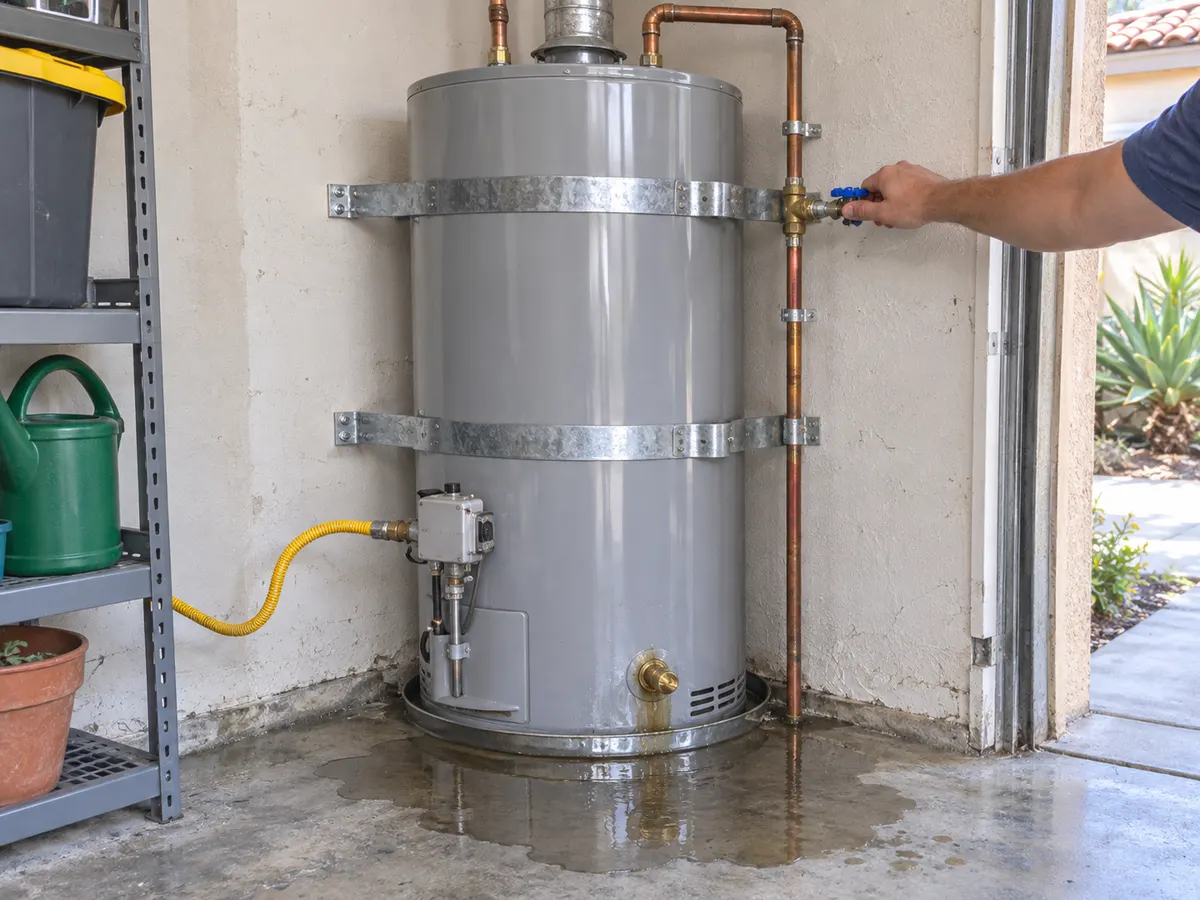
Once the shaking stops and it is safe to move around, look for running water at the water heater, toilets and sink lines, and close the main shut-off if anything is leaking.
Winter storms and roof leaks
Rain here tends to arrive in bursts. The National Weather Service’s February 2024 climate report for downtown Los Angeles shows 4.10 inches on February 4, 2.93 inches on February 5 and 12.66 inches for the month[NWS Los Angeles].
Storms like that find every weak spot: roof flashing, skylights, sliding door tracks and low garage slabs. Water that comes through the roof soaks insulation and drywall in the ceiling before it shows as a stain.
Keep people out from under a bulging ceiling and away from wet light fixtures, and photograph the damage before the crew starts[FEMA].
Flood safety first
Do not walk or drive through floodwater. The National Weather Service says 6 inches of fast-moving water can knock over an adult and 12 inches of rushing water can carry away most cars[NWS].
With water in the house, turn off power at the breaker if you can do it safely, and disconnect appliances before power is restored[CDC]. Document the damage with photos before anything is moved[FEMA].
Once the house is dry
Keep the final moisture readings and the drying log with your photos. Check the area again over the next few weeks for odors, stains or swelling, which can mean water was missed. The EPA notes that cleanup is not finished until the water or moisture problem itself is fixed[EPA].
Sewage cleanup and San Fernando homes
In the city of San Fernando, 73% of the 6,613 housing units are detached houses and 17% are apartments, condos or other multi-unit homes; owners live in 62% of occupied units[U.S. Census Bureau]. 83% of homes in the city of San Fernando were built before 1980 and the median year built is 1956[U.S. Census Bureau]. At that age, original galvanized or copper supply lines, cast-iron drains and older shut-off valves deserve a look.
The City of San Fernando runs its own water and sewer utilities, separate from LADWP. To report a leaking or broken water meter or a broken water main, call Public Works at (818) 898-1293; after hours and on weekends the city lists (818) 898-1267[City of San Fernando].
Other services in San Fernando
- Water damage restoration in San Fernando
- Flood cleanup
- Burst pipe water damage
- Crawl space water removal