Under the IICRC’s 2026 statement, rising water from rivers or streams is a Category 3 example, and storm water is classified case by case after inspection[IICRC 2026 position statement]. The plan starts from that call.
FEMA’s guidance is to document the damage, stay away from wet electrical equipment, and take out wet drywall and insulation[FEMA]. Work in the San Fernando Valley follows that order: safety, photos, removal, cleaning, drying.
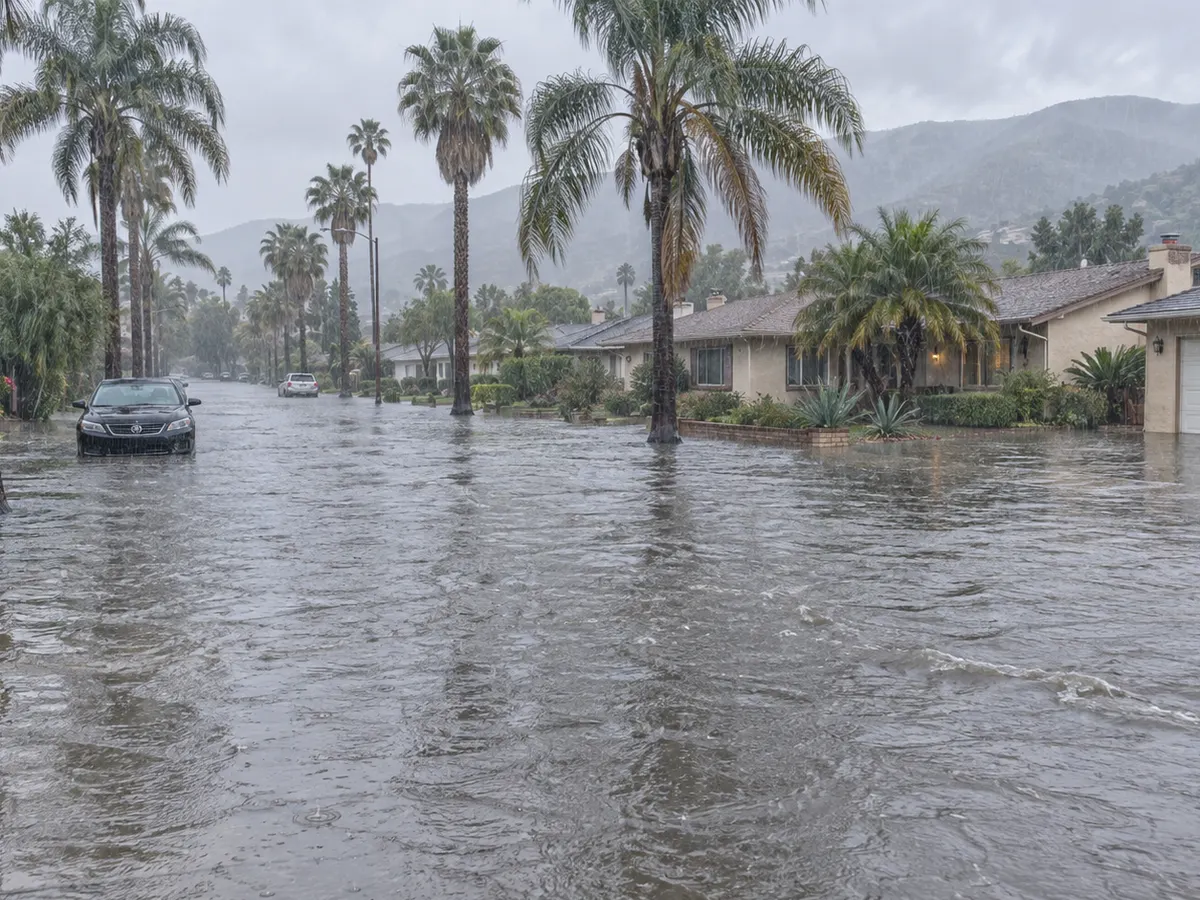
Typical steps
- Wait for safe entry. Do not go back in until officials say it is safe[FEMA].
- Document. Photos and video of every room.
- Remove. Wet drywall, insulation and flooring come out.
- Clean and dry. Surfaces cleaned, then dried to verified readings.
Do
- Wear rubber boots and gloves[CDC].
- Keep children and pets out of flooded rooms.
When a leak is bigger than it looks
- Water has been sitting for more than a day, or you do not know how long it was there
- Carpet is wet across a room, or the pad squishes when you step on it
- Drywall is soft, stained or swollen at the bottom
- Water came through a ceiling or reached a second room
- The water came from a toilet, drain or the outside
- There is a musty smell after the surface has dried
Any of these usually means water has moved into materials you cannot dry with towels and a fan. A moisture meter will show how far it went.
Clean water, gray water and sewage: the three categories
The IICRC splits water into three categories. Its examples of grossly contaminated Category 3 water include sewage, waste line backflows from beyond a trap, seawater flooding, rising rivers or streams and contaminated wind-driven rain[IICRC 2026 position statement].
The category decides the order of work. Category 1 drying can start right away, while Category 2 and 3 losses get cleaned up under contamination controls before drying begins[IICRC 2026 position statement]. Storm water is not automatically Category 3; the restorer decides after inspecting[IICRC 2026 position statement].
A clean leak does not stay clean forever. Time and temperature can change the category[IICRC 2026 position statement], and a warm house speeds that up.
Water removal and drying equipment used in the San Fernando Valley
- Pumps and extractors. Submersible pumps remove deep water. Extraction wands and weighted tools pull water out of carpet and pad.
- Air movers. Fans set at angles along walls and floors move air across wet materials.
- Dehumidifiers. Remove water from the air. Without them, air movers just push damp air around the room.
- Moisture meters. Measure the water in drywall, framing and subfloor, and confirm when each area is dry.
- Infrared cameras. Help locate wet areas behind finished surfaces, with meters used to confirm.
- Containment. Plastic sheeting closes off the work area, which keeps contaminated water and drying air where they belong.
Saving belongings and materials after water damage
Two questions decide it: was the water clean, and how fast can the item dry? Wet materials that cannot be cleaned and dried within 24 to 48 hours should be thrown out, according to the EPA[EPA flood cleanup guide]. With floodwater, the CDC says to throw away items that cannot be disinfected, like wall coverings, cloth, rugs and drywall[CDC].
With clean water caught early, the EPA notes that wallboard, fiberglass insulation and wall-to-wall carpet may sometimes be dried and saved, though replacing them can avoid indoor air problems later[EPA flood cleanup guide].
Take photos and video of damaged items before they are removed[FEMA].
Earthquakes, water heaters and broken lines
The magnitude 6.7 Northridge earthquake struck at 4:30 in the morning on January 17, 1994, on a buried thrust fault rooted under the San Fernando Valley[USGS]. It left more than 7,000 people injured and 20,000 residents homeless, with property damage estimated at about 40 billion dollars[USGS].
The USGS notes that strong shaking can topple water heaters and break water mains[USGS]. California law requires all residential water heaters to be braced, anchored or strapped to resist falling or moving in an earthquake[California Health and Safety Code 19211], and the Division of the State Architect calls for at least two sets of straps on a typical tank[California DSA].
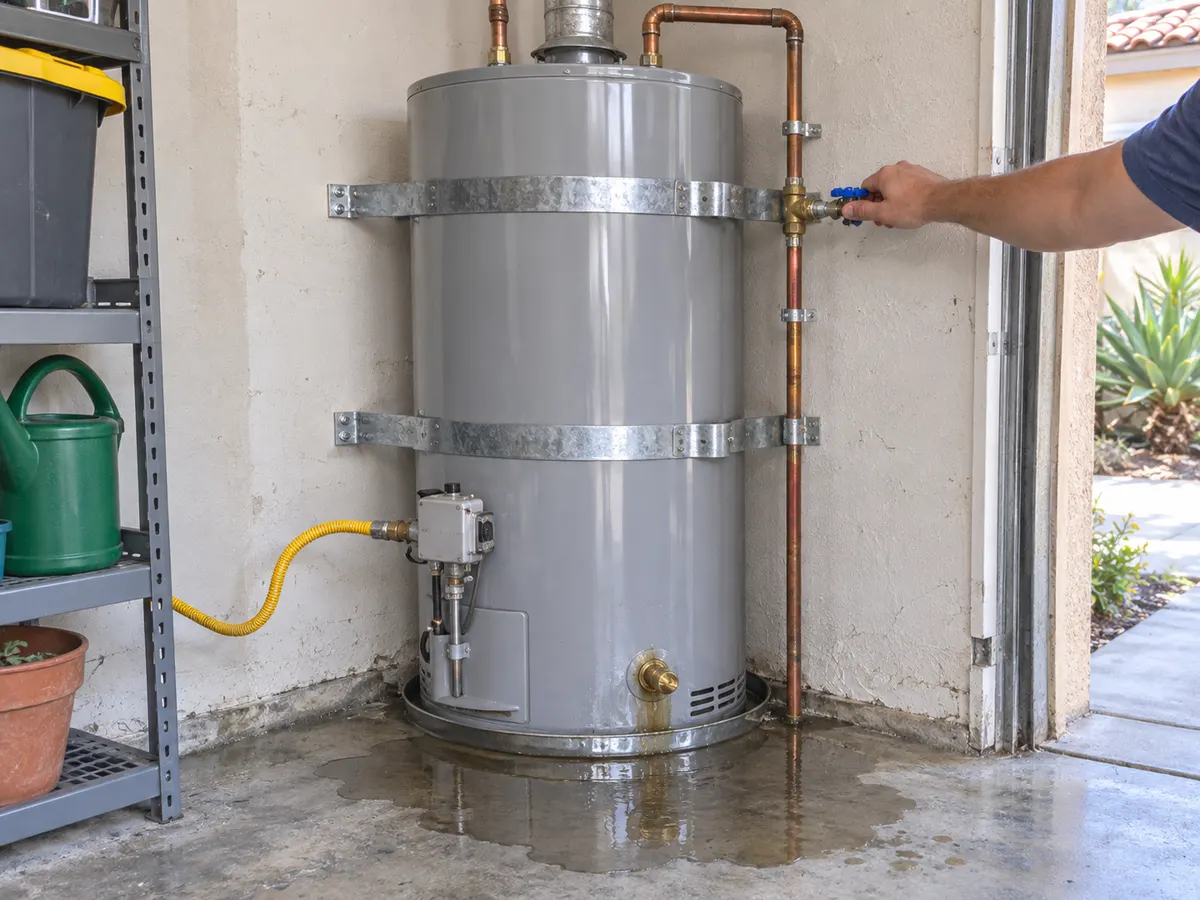
Once the shaking stops and it is safe to move around, look for running water at the water heater, toilets and sink lines, and close the main shut-off if anything is leaking.
Toilet and drain backups
A backup from a toilet, tub or floor drain is grossly contaminated water under the IICRC categories[IICRC 2026 position statement]. The area is closed off, contaminated porous materials come out, and surfaces are cleaned before any drying starts.
In the City of Los Angeles, the public sewer main belongs to the city, but the property owner is responsible for the entire sewer lateral, from the building to the street connection. LA Sanitation also says that if any fixture in a home sits lower than the street manhole cover, the property needs a backwater valve, which requires a permit from the Department of Building and Safety[LA Sanitation].
Questions to ask the restoration company
- What category is the water, and how does that change the plan?
- Where did the moisture meter show water, and how far did it spread?
- What needs to be removed, and why can it not be dried?
- How many dehumidifiers and air movers will run, and how often will someone check readings?
- Will I get a written scope and daily drying logs?
- Can you show your California contractor license?
Clear answers to these questions are a good sign. So is a technician who takes readings before quoting.
After the drying equipment leaves
Ask for a copy of the final readings and keep them with your damage photos. In the weeks after, watch for a damp smell, new stains or swelling floors. Fix the source for good; the EPA is clear that the water problem must be fixed or it comes back[EPA].
Flood restoration by community
- Van NuysFlood restoration in Van Nuys, CA 91406 and 91405
- Sherman OaksFlood restoration in Sherman Oaks, CA 91403
- Woodland HillsFlood restoration in Woodland Hills, CA 91364 and 91367
- Canoga ParkFlood restoration in Canoga Park, CA 91303
- Sun ValleyFlood restoration in Sun Valley, CA 91352
- Valley VillageFlood restoration in Valley Village, CA 91607